
Welcome to moneytags.site! As we become more conscious consumers, the choices we make, right down to the fabric of our clothes, carry significant weight. Many of us turn to natural fibers, but the real challenge is discerning which is truly the better friend to our planet.
Today, we’re diving deep into a sustainable showdown between two of the world’s most popular natural textiles: the resilient linen and the ubiquitous cotton. Both have been with humanity for millennia, yet their environmental footprints couldn’t be more different.
The Introduction: Understanding Sustainable Textiles 🌱
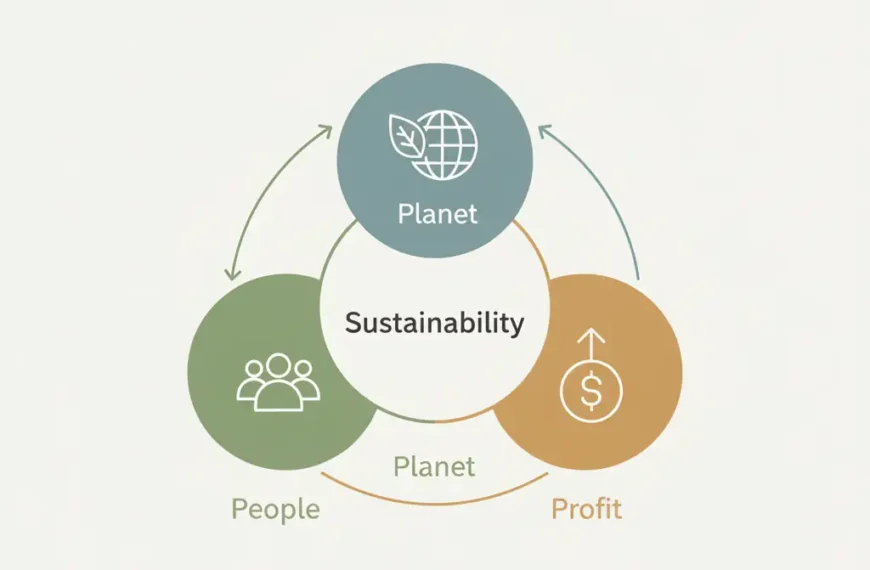
Sustainability in textiles isn’t just about how long a product lasts; it encompasses the entire lifecycle. We must consider the farming practices, water and energy consumption, use of pesticides, and the final biodegradability of the material.
For a fabric to be truly sustainable, it should minimize harm at every stage. We’re looking for efficiency in growth and processing, non-toxicity in dyeing and finishing, and longevity in its eventual use by you.
Cotton: The Comfortable King and Its Costs
Cotton is beloved for its softness, breathability, and versatility, making it the most used natural fiber globally. However, this popularity comes with considerable environmental baggage, primarily related to its cultivation.
Conventional cotton farming is incredibly thirsty, requiring vast amounts of water, especially in arid regions. For instance, creating just one cotton t-shirt can demand thousands of liters of water, straining local resources significantly.
Furthermore, standard cotton production relies heavily on pesticides and insecticides. These chemicals degrade soil health, contaminate waterways, and pose health risks to farm workers and surrounding ecosystems.
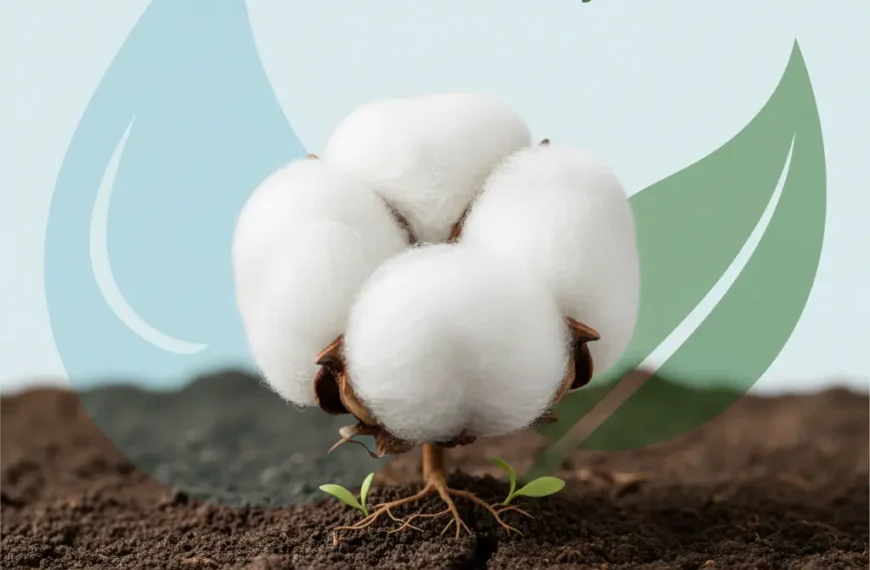
The rise of Organic Cotton offers a much-needed improvement. It bans synthetic pesticides and genetically modified seeds, leading to better soil quality and lower water usage compared to its conventional counterpart.
Micro-Case Example: A switch from conventional to organic cotton in a large textile operation reduced water pollution by an estimated 98% because of the elimination of chemical runoff.
Linen: The Ancient Eco-Warrior 🌿
Linen, woven from the fibers of the flax plant, is often hailed as a sustainability champion. Its reputation is rooted in the unique characteristics of how the flax plant grows and how its fibers are processed.
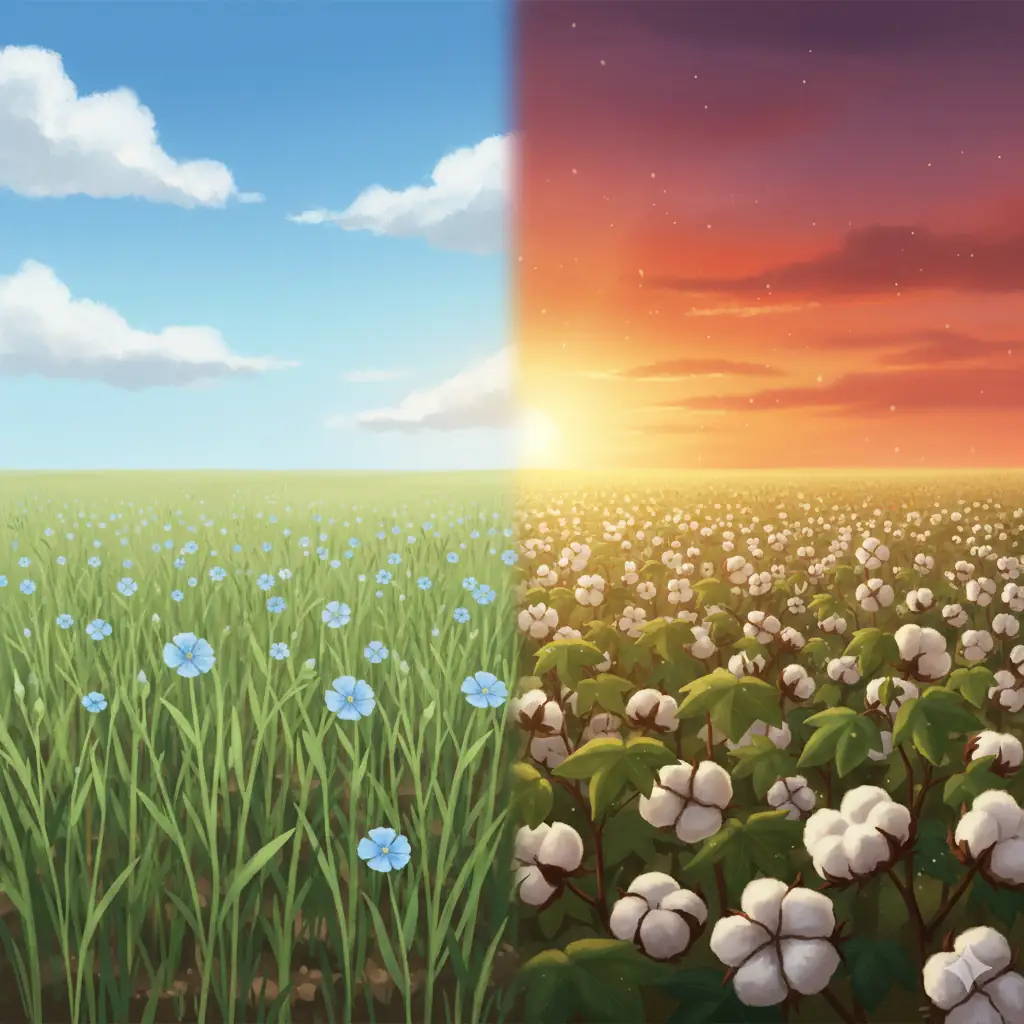
Flax is a remarkably resilient crop that thrives even in poor soil with minimal water. It generally requires far less irrigation than cotton, often relying solely on rainwater, making it significantly less demanding on freshwater supplies.
Crucially, the flax plant needs very few, if any, chemical pesticides or fertilizers to flourish. This makes its cultivation inherently less polluting and safer for both the environment and those who farm it.
Processing and Practicality: A Deeper Look
The process of converting flax into linen is relatively low-impact. The separation of the fibers, known as retting, can often be done naturally through rain and dew, further minimizing the need for harsh chemicals.
Linen fibers are also exceptionally strong and durable. This longevity means linen garments last for years, often decades, reducing the need for constant replacement and ultimately lessening textile waste.
Even better, at the very end of their life, both linen and cotton are fully biodegradable, assuming they haven’t been treated with synthetic finishes or blended with plastics like polyester. They return to the earth without leaving microplastic pollution.
The Direct Comparison: Growing the Future 🌍
When we look at the core metrics of cultivation, linen consistently outperforms conventional cotton. It’s an efficient use of land and resources, minimizing the negative externalities of farming.
However, it’s important to remember that organic cotton closes the gap significantly. Choosing organic cotton over conventional is always a step toward greater sustainability, mitigating the worst impacts of the conventional cotton industry.
Key Sustainability Metrics Comparison
| Feature | Linen (Flax) | Conventional Cotton | Organic Cotton |
|---|---|---|---|
| Water Use | Very Low (Rain-fed) | Extremely High | Lower (Soil-retaining) |
| Pesticide Use | Negligible / None | Very High | None (Banned) |
| Fiber Strength | High (Excellent Durability) | Medium | Medium |
| Land Use | Efficient (Grows on poor soil) | Less Efficient | Good (Improves soil health) |
Beyond the environmental statistics, linen offers a natural anti-bacterial quality and becomes softer with every wash. This means less need for excessive laundering and less reliance on fabric softeners, offering small sustainable wins during its practical use.
Ultimately, a choice for sustainability is a choice for responsibility. The data overwhelmingly suggests that linen holds the upper hand in resource efficiency and low-impact cultivation, particularly when comparing against standard cotton.
Conclusion: Making an Informed Choice 💡
If you are looking for the absolute most eco-friendly natural fiber available today, the crown belongs to linen. Its minimal water needs and chemical-free growth make it a clear winner for a regenerative future in fashion.
However, don’t dismiss cotton entirely. When linen is not an option or the price point is prohibitive, always pivot to certified organic cotton. It represents a vastly superior choice to conventional cotton, supporting healthier farming methods.
By understanding the journey of these fibers, you empower yourself to make better purchasing decisions. Every choice for a sustainable fabric is a vote for a healthier planet—and that’s a trend that never goes out of style.
 By
By