
Welcome to moneytags.site! We all love a good bargain, and the allure of trendy, affordable clothing is undeniably strong. This is the world of ‘fast fashion,’ a business model that thrives on rapid production and quick consumption.
While fast fashion brings us accessible style, its true cost is far greater than the price tag suggests. It places an enormous burden on our planet, impacting everything from water resources to air quality.
Today, we’re going to pull back the curtain and explore the significant environmental impact of this industry, helping you understand the consequences of our clothing choices.
The Definition of Fast Fashion: More Than Just Trends 👗
Fast fashion refers to the rapid production of inexpensive clothing that replicates the latest runway trends, making them available to consumers almost immediately. It encourages frequent purchasing and disposability, often at a very low price point.
This model is built on speed, from design to retail, pushing out new collections weekly instead of seasonally. Brands like Zara and H&M are often cited as pioneers in this approach, offering ever-changing stock.
The core idea is to get consumers to buy more, more often, leading to a relentless cycle of production and consumption that has significant environmental repercussions.
Water Woes: A Thirsty Industry 💧
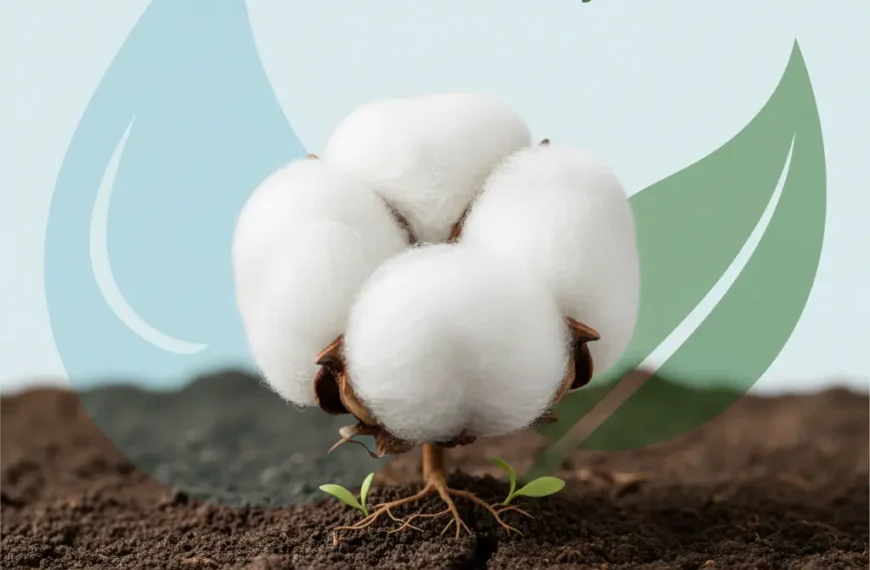
One of the most profound impacts of fast fashion is its staggering water consumption. Growing conventional cotton, a primary fiber, is incredibly thirsty, requiring thousands of liters for just one t-shirt.
Beyond cultivation, the dyeing and finishing processes also demand vast quantities of water. This water often becomes contaminated with toxic chemicals before being discharged into rivers and lakes, impacting ecosystems and local communities.
For instance, in regions like the Aral Sea basin, cotton farming has nearly dried up an entire sea, illustrating the devastating scale of water mismanagement in textile production.
Pollution from Dyes and Chemicals 🧪
The vibrant colors and diverse finishes we see in fast fashion often come at a heavy cost. The dyes and chemicals used to process textiles are highly polluting, containing substances like lead, mercury, and cadmium.
These toxic effluents are frequently dumped untreated into waterways, particularly in developing countries where environmental regulations are lax. This contaminates drinking water and destroys aquatic life, posing severe health risks.
Even the soft finish on your new sweater might have been achieved using chemicals that are harmful during production and can leach into water systems.
Waste Generation: A Mountain of Discarded Clothes 🗑️
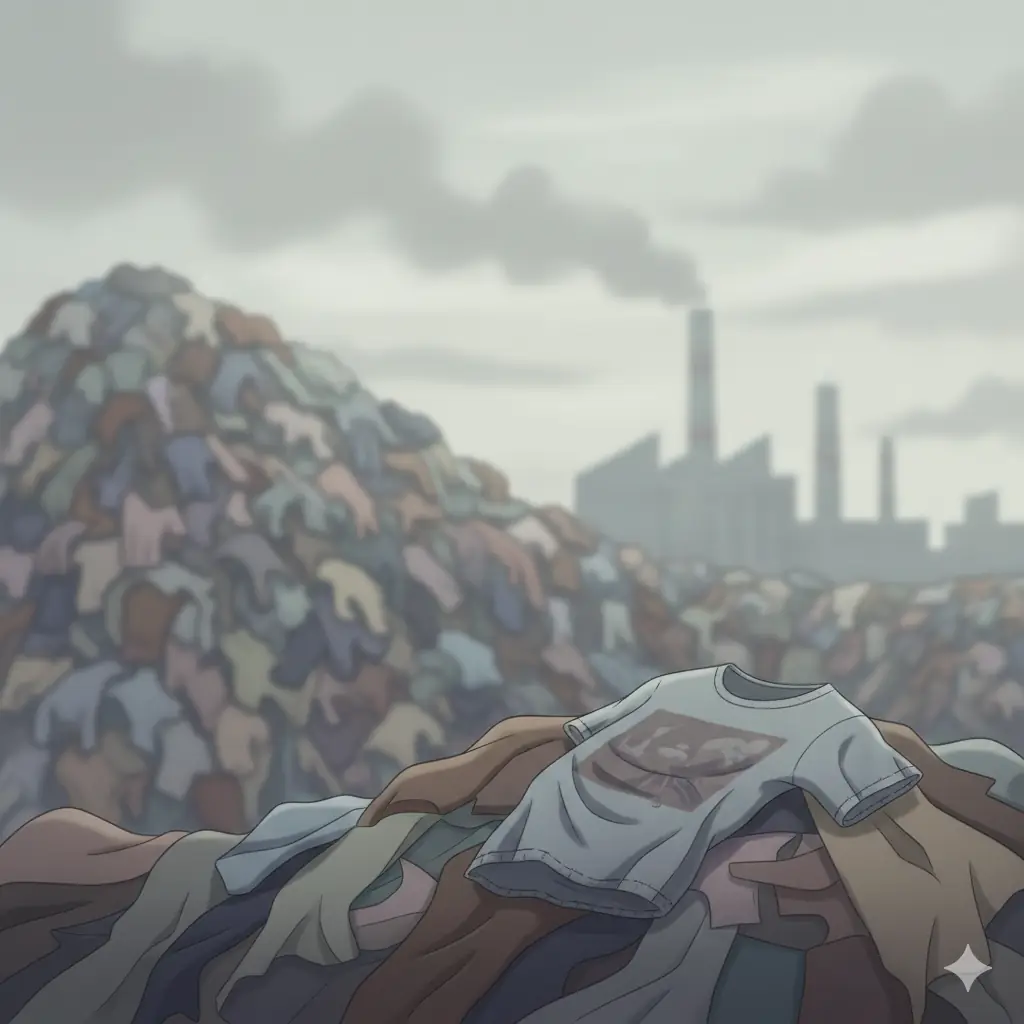
The ‘buy cheap, dispose quickly’ mentality of fast fashion has led to an unprecedented amount of textile waste. Clothing items are often worn only a few times before being thrown away, ending up in landfills.
Synthetic fabrics like polyester, commonly used in fast fashion, are essentially plastic. They take hundreds of years to decompose and release microplastics into our environment every time they are washed or discarded.
Consider that the average American throws away about 81 pounds of clothes each year. Globally, this accumulates into mountains of textiles, much of which could have been recycled or repurposed.
Microplastic Pollution: The Invisible Threat 🔬
Every wash cycle of synthetic clothing releases thousands of tiny plastic fibers, known as microplastics, into our waterways. These microscopic particles bypass filtration systems and end up in rivers, oceans, and even our drinking water.
Marine life ingests these microplastics, which then enter the food chain, eventually reaching humans. The long-term health effects of this widespread contamination are still being studied, but the implications are concerning.
This silent form of pollution is a direct consequence of our reliance on cheap, synthetic materials that are central to the fast fashion model.
Carbon Emissions: Fueling Climate Change 💨
The entire lifecycle of a fast fashion garment contributes significantly to greenhouse gas emissions. This includes the energy-intensive manufacturing process, transportation across continents, and even the chemical-laden farming of raw materials.
Factories often rely on fossil fuels for power, and the global shipping network required to move products from production hubs to consumers adds layers of carbon to the atmosphere. It’s a vast logistical chain with a heavy footprint.
The fashion industry is estimated to be responsible for 2-8% of global carbon emissions, a figure that continues to rise with the growth of fast fashion.
- Notes on Emissions:
- Polyester production alone releases greenhouse gases like nitrous oxide.
- Heavy machinery used in factories consumes vast amounts of electricity.
- Global shipping and air freight contribute significantly to logistical emissions.
The Solution: Shifting Towards Conscious Consumption ✨
Understanding the environmental impact of fast fashion is the first step toward making a difference. The good news is that as consumers, we have the power to drive change by making more conscious choices.
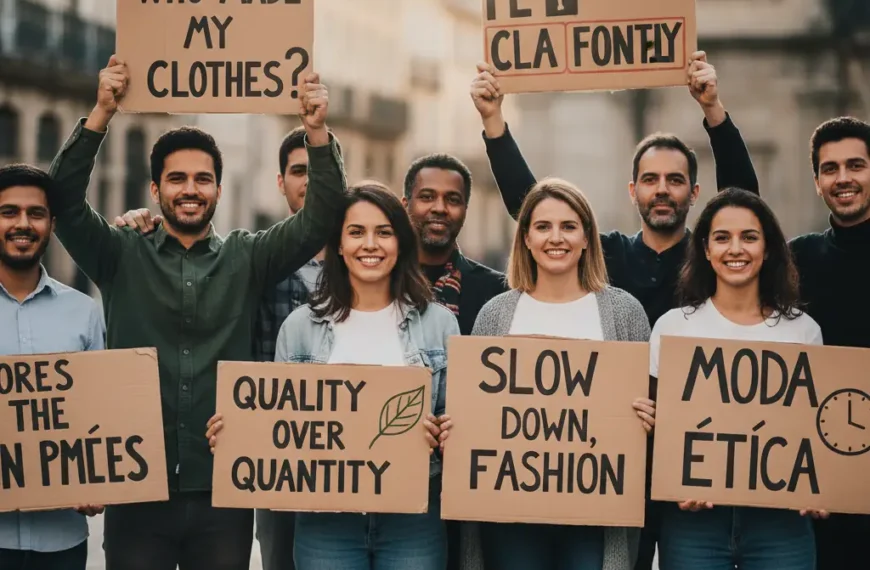
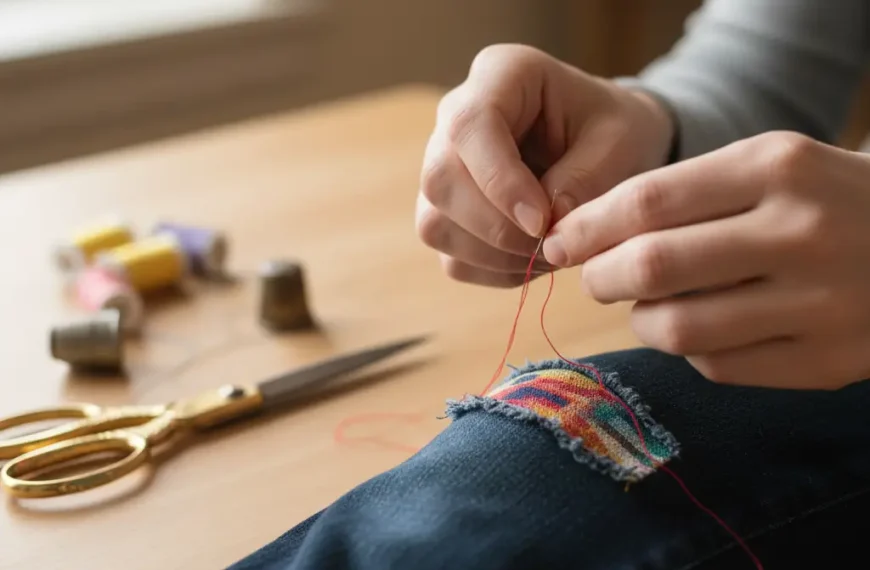
Embrace buying less, choosing higher quality garments that last, and opting for ethical and sustainable brands. Explore options like second-hand clothing, clothing swaps, and repairing items instead of discarding them.
Supporting brands that prioritize transparency, fair labor, and eco-friendly materials sends a clear message that you value sustainability over fleeting trends.
Conclusion: Dressing with a Conscience 💚
The environmental footprint of fast fashion is undeniable and far-reaching, affecting water, land, and air. It’s a complex issue, but one that we can collectively address through informed decision-making.
By choosing to invest in sustainable fashion, supporting ethical brands, and embracing a ‘less is more’ philosophy, we can reduce our individual impact. Our choices today shape the fashion industry of tomorrow.
Let’s dress not just for style, but for the health of our planet. Every conscious choice counts.

 By
By