
Welcome to moneytags.site! As sustainability becomes a core focus in fashion, the concept of giving waste materials a second life is gaining traction. This is the world of recycled fabrics, a crucial component of the circular economy.
Many of us are aware that clothing can be made from recycled materials, but the actual transformation process often remains a mystery. It’s a complex, innovative journey that turns discarded items into brand new threads.
Today, we’re diving into the manufacturing process of some of the most popular recycled fabrics, exploring the technology that makes this eco-friendly shift possible.
The Starting Line: Sourcing the Waste Material 🗑️
The first and most critical step in creating any recycled fabric is gathering and sorting the raw materials. Recycled fabrics primarily come from two main sources: pre-consumer waste and post-consumer waste.
Pre-consumer waste includes scraps and offcuts from the textile factory floor—material that never reached the end-user. Post-consumer waste is what we typically discard, like used clothing, discarded textiles, and plastic bottles.
Effective sourcing requires meticulous sorting by type and color. Mixing different materials (like polyester with cotton) or contaminants can severely compromise the quality of the final recycled yarn.
Recycled Polyester (rPET): The Plastic Bottle Savior 🥤
Recycled Polyester, known as rPET, is one of the most common and successful forms of recycled fabric. It directly addresses the global plastic crisis by repurposing PET bottles, the same plastic used in food and beverage containers.
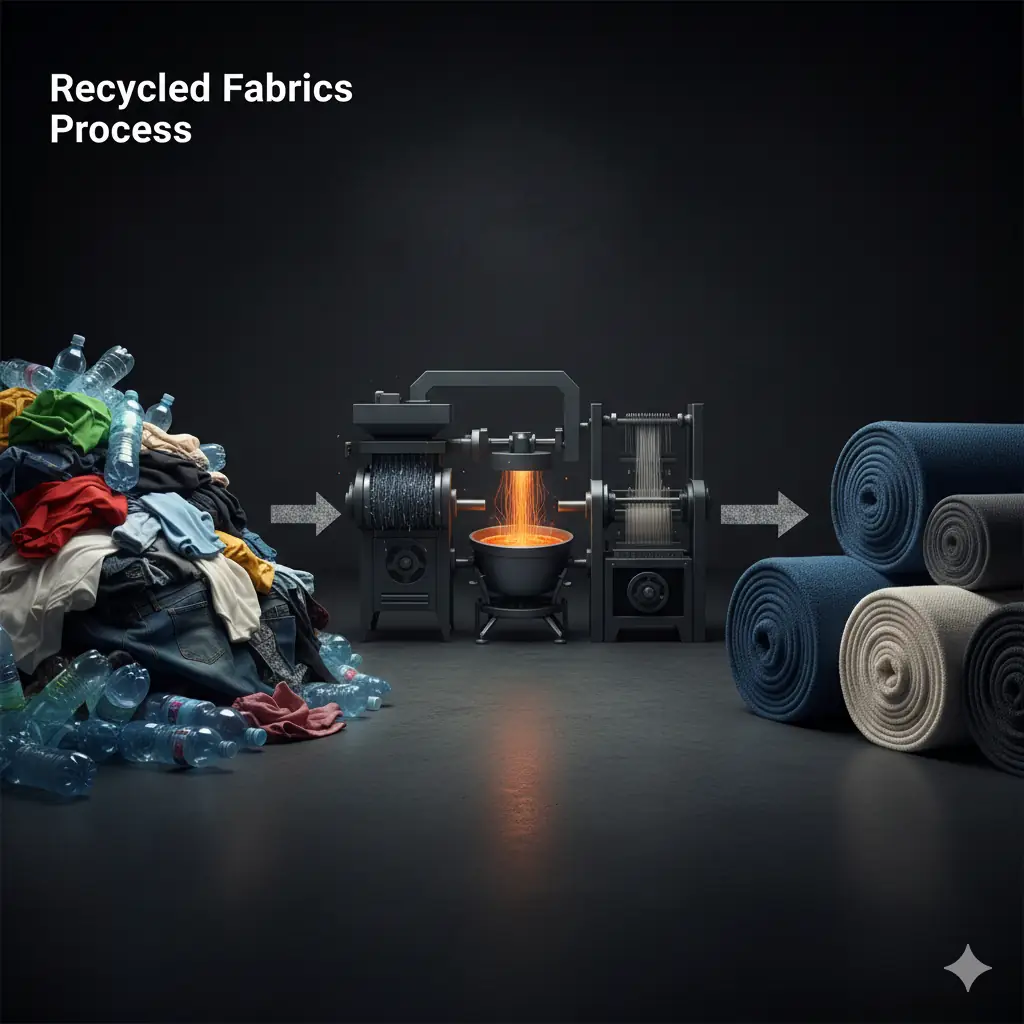
The process begins when clean, sorted PET bottles are sterilized, dried, and then crushed into small, uniform flakes. These flakes are the new raw material that replaces petroleum-based virgin polyester.
The rPET Transformation Process
The flakes are then melted down into a thick liquid polymer. This molten material is pushed through tiny spinnerets—much like a showerhead—to form long, thin filaments. These filaments are the new polyester fibers.
The fibers are cooled, stretched, and spun into thread. This thread is then woven or knitted into the final fabric, which is virtually indistinguishable from new polyester. This process significantly reduces the need for new oil extraction.
For example, turning about ten standard plastic bottles into rPET can create enough fabric for a single new t-shirt or backpack, effectively diverting that plastic from landfills or oceans.
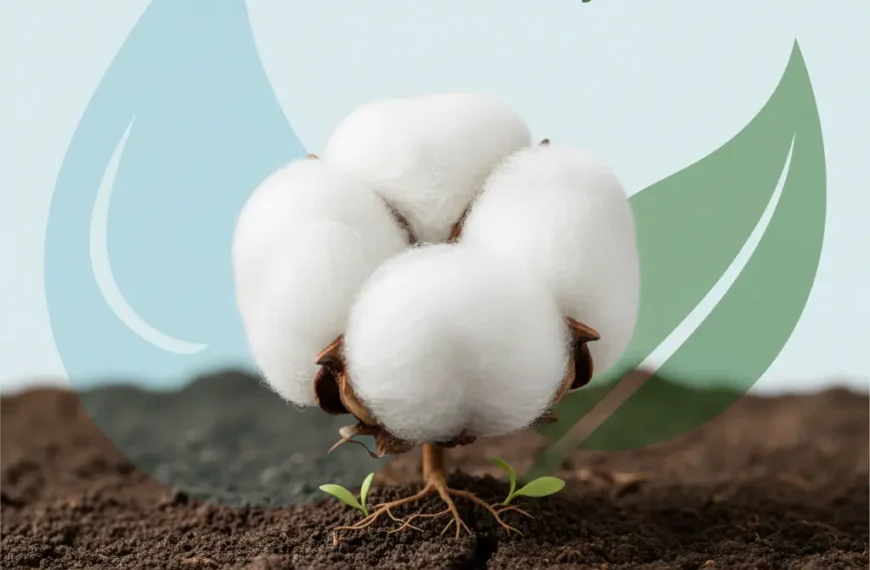
Recycled Cotton: Closing the Textile Loop 👚
Recycled cotton focuses on repurposing textile waste, particularly old garments or manufacturing scraps. This process is generally more challenging than recycling plastic because cotton fibers shorten each time they are processed.
The collected cotton materials are first sorted by color. Color sorting is vital because it avoids the need for re-dyeing, a process that consumes vast amounts of water and chemicals, thus maximizing the environmental savings.
The Recycled Cotton Production Cycle
The sorted textiles are then fed into industrial shredding machines, which break the fabric down back into individual fibers. This process weakens and shortens the cotton fibers significantly, which affects the final fabric’s strength.
To ensure a durable and usable final product, the reclaimed cotton fibers are often blended with virgin organic cotton or recycled polyester. This blending stabilizes the yarn, making it strong enough to be spun into new thread.
The newly spun yarn is then knitted or woven into fresh fabric, like a recycled denim or jersey. This method saves enormous amounts of water, as it bypasses the need to grow new virgin cotton.
Beyond Plastics and Textiles: Other Innovations 💡
The recycling landscape is constantly expanding beyond the major players. Innovative technologies are being developed to tackle complex materials and hard-to-recycle blends.
One emerging process is chemical recycling, which breaks down materials at the molecular level. This is particularly promising for fabrics that are a blend of cotton and polyester, allowing manufacturers to separate the polymers for reuse.
Another fascinating example is recycled nylon, often sourced from discarded fishing nets and industrial plastic. This marine waste is regenerated into high-quality yarn suitable for swimwear and sportswear.
Tips for Identifying Recycled Fabrics ✨
When shopping, how can you ensure you are supporting genuine recycled fabric usage? The key is to look for specific, transparent certifications and material percentages.
- Look for the Global Recycled Standard (GRS) certification, which verifies the content of recycled materials and ensures responsible social, environmental, and chemical practices.
- Check the label for the exact percentage, such as ‘Made with 80% Recycled Polyester’ or ‘Contains 50% Post-Consumer Recycled Cotton.’
- Beware of ‘greenwashing’; a brand claiming to use recycled material should be able to specify the source and processing method.
The Impact: Why Recycling Matters 🌿
The benefits of using recycled fabrics are multilayered. They dramatically reduce the amount of waste sent to landfills, lowering pollution and conserving precious land space.
Furthermore, these processes reduce the demand for virgin resources. Using rPET saves oil, and using recycled cotton saves immense quantities of water and reduces the use of harmful pesticides associated with conventional cotton farming.
This shift drives us closer to a true circular economy, where waste is minimized, and resources are kept in use for as long as possible, benefiting both the environment and future generations.
Conclusion: Threading a Sustainable Future 🧵
The creation of recycled fabrics is a powerful demonstration of innovation meeting necessity. It transforms waste products into valuable resources, offering a tangible solution to the environmental challenges posed by the traditional fashion industry.
Next time you purchase an item made from rPET or recycled cotton, you’re not just buying a piece of clothing. You are supporting a technology that cleans up the planet and conserves vital resources.
Which recycled material are you most interested in adding to your wardrobe next?
 By
By