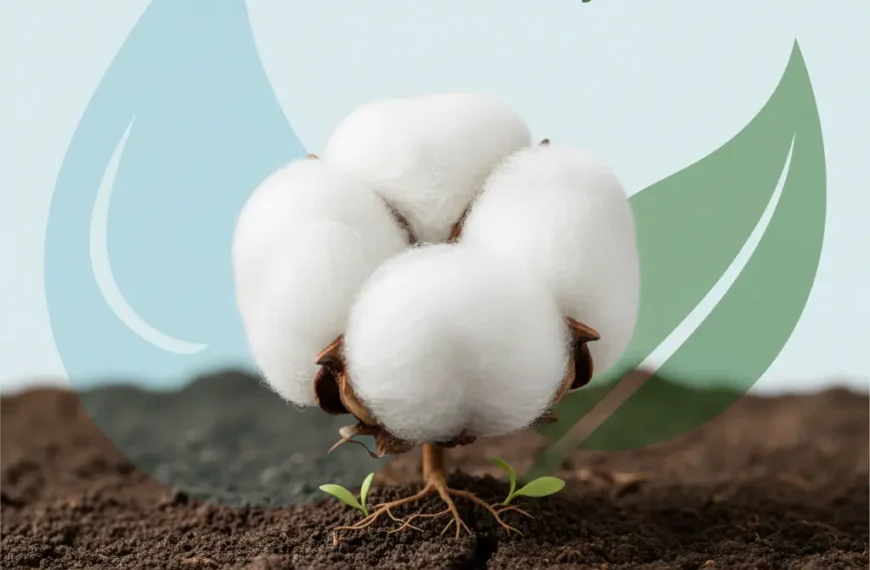

When we talk about sustainable fashion, our minds often jump straight to organic cotton. While essential, cotton is just one piece of a much larger, and rapidly evolving, puzzle.
The future of fashion sustainability isn’t about relying solely on natural fibers. It involves radical textile innovation: turning waste into wearable materials, growing fibers in labs, and finding new uses for unexpected natural resources.
Understanding these next-generation fabrics is crucial. They are what will truly reduce the fashion industry’s massive environmental footprint, offering performance without planetary cost.
The Need for New Textile Solutions
The current textile industry relies heavily on two things: resource-intensive natural fibers and fossil fuel-based synthetics. Both have severe environmental drawbacks that the planet can no longer sustain.
For instance, conventional cotton requires enormous amounts of water and pesticides. Conversely, polyester, a popular synthetic, is made from petroleum and takes hundreds of years to break down, releasing microplastics in every wash.
We need solutions that offer performance, durability, and a dramatically reduced impact on land, water, and climate. Innovation is stepping in to fill this critical gap.
Defining ‘Eco-Friendly’ in the Modern Context
In the past, ‘eco-friendly’ was often a loose term. Today, it must meet specific criteria, such as low water consumption, minimal chemical use, energy efficiency in production, and crucially, end-of-life biodegradability or recyclability.
A truly sustainable fabric tackles multiple issues at once. It might be sourced from regenerative agriculture, produced with closed-loop systems that recycle water and chemicals, and designed to be easily composted.
This holistic approach is the benchmark for the fabrics we will see dominating the market in the coming years. It’s about minimizing harm from start to finish.
Category 1: Bio-Based Innovations (What’s Growing Now)
A significant area of growth is in bio-based materials, which are derived from natural sources, often agricultural waste or fast-growing, low-impact plants. These are designed to replace both conventional natural fibers and synthetics.
Think of it as looking at our food and waste streams and asking: what can be spun into thread? The answers are often surprising and highly functional.
Pineapple Leaf Fiber (Piñatex)
Piñatex is a material made from the cellulose fibers extracted from pineapple leaves, which are agricultural by-products. Farmers previously left these leaves to rot, but now they are a valuable resource.
The result is a durable, non-woven textile that looks and feels like leather. This innovation gives farmers extra income while reducing waste, representing a truly circular approach to material creation.
It performs exceptionally well as an alternative to animal leather, requiring no additional land, water, or pesticides for its fiber source.
Textiles from Citrus and Banana Waste
Companies are now extracting cellulose from the waste produced by the citrus industry, spinning it into a silky, soft fabric similar to viscose or rayon. This process repurposes mountains of fruit peel that would otherwise end up in landfills.
Similarly, banana fiber (Muslin) uses the discarded stalks of the banana plant after fruit harvesting. This gives a purpose to what was formerly waste, creating a sturdy, slightly rough textile.
These fabrics are fantastic examples of moving toward a circular economy where waste streams become raw material inputs.
Category 2: Lab-Grown and High-Tech Fibers
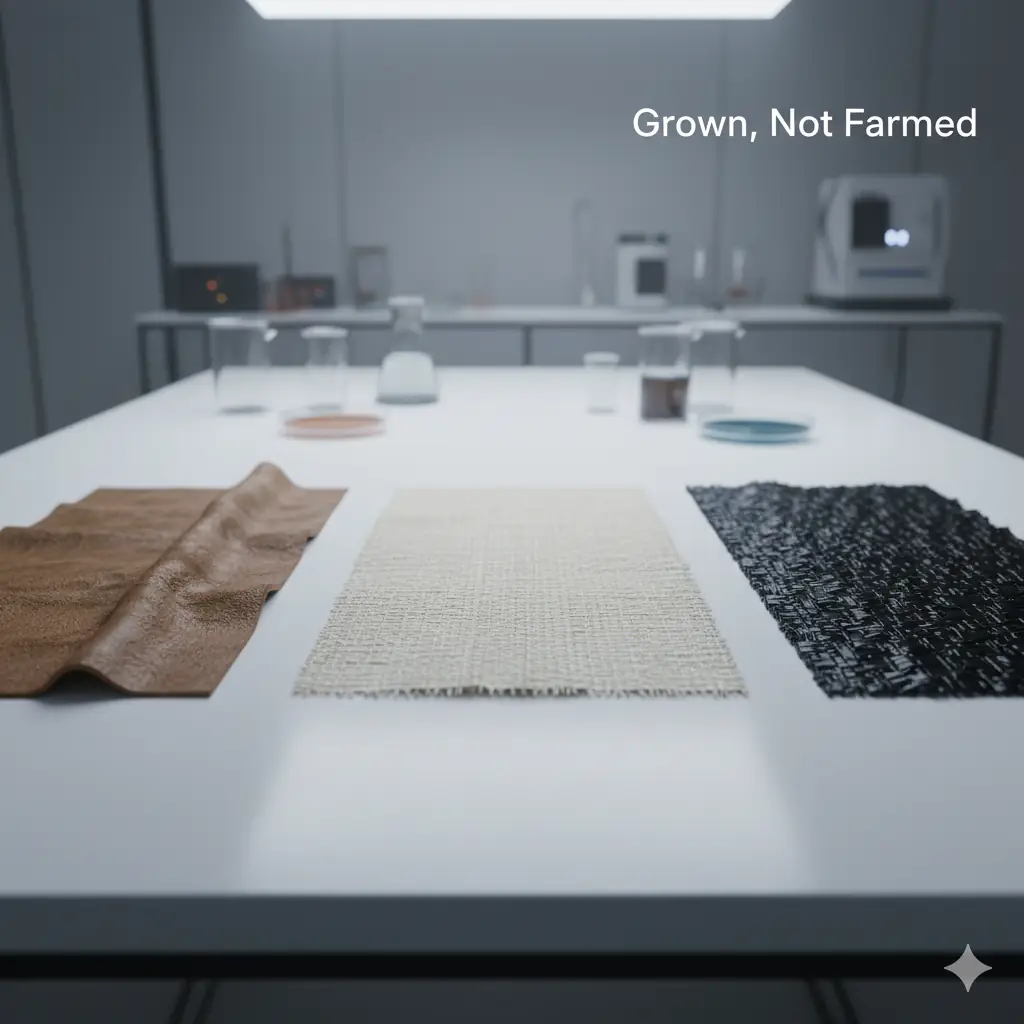
The second major thrust in fabric innovation comes from the lab, where scientists are manipulating organisms or processes to create materials with specific, sustainable properties.
This is where biology meets textile engineering. The goal is to grow fibers efficiently in controlled environments, bypassing the need for large tracts of farmland and traditional chemical processing.
Mycelium Leather (Fungi)
Mycelium, the root structure of mushrooms, is being grown in labs to create a durable, customizable material that is a near-perfect replacement for animal leather. This process is highly controlled and fast.
It can be ‘tanned’ and finished to mimic various leather textures, all while being biodegradable at the end of its life. It requires far fewer resources than both conventional and synthetic leather.
Recycled and Closed-Loop Synthetics
While new synthetic fabrics are bad, old synthetics are an abundant resource. Innovations like ECONYL take nylon waste—such as fishing nets and carpet scraps—and purify it to create a new, high-quality nylon yarn.
This closed-loop system is vital for cleaning up the oceans and diverting waste from landfills. It shows that sometimes the most sustainable fabric is one that already exists.
The Pros and Cons of Textile Innovation
| Advantages (Pros) | Challenges (Cons) |
|---|---|
| Reduced reliance on virgin natural resources | High upfront R&D and manufacturing costs |
| Creation of circular supply chains (waste to fiber) | Scaling production to meet fast fashion demand |
| Often biodegradable or highly recyclable at end-of-life | Need for consumer education on new materials |
| Potential for superior performance and customization | Sourcing waste streams reliably and consistently |
As with all new technologies, there’s a trade-off. While the benefits are clear, the process of bringing these fabrics to mass production remains a hurdle that requires significant investment.
🌱 Notes on Transitional Materials
It’s important to recognize that while we wait for these high-tech solutions to scale, other transitional fabrics are helping reduce impact now. These materials, while not perfect, are better options.
- Organic Cotton: Still a crucial step, eliminating pesticides and minimizing water pollution compared to conventional cotton. Look for GOTS certification.
- TENCEL™ Lyocell: A premium, branded form of rayon/viscose made from wood pulp. Its key sustainable feature is the closed-loop production, where nearly 100% of the solvent and water used is recycled.
- Recycled Cotton: Using textile scraps or post-consumer clothes to create new yarn. This saves water, dye, and landfill space, though it often needs blending with virgin fibers for strength.
Choosing these transitional fabrics supports the industry shift while the truly radical innovations continue to mature. Every improved fiber counts toward a better system.
What This Means for the Everyday Consumer
The rise of these innovative fabrics means you will start seeing new, unfamiliar names on clothing tags. Don’t let the science scare you; embrace it as a chance to vote for the future.
When you see fabrics like Piñatex or Mylo™ (Mycelium leather), understand that you are looking at a solution that minimizes agriculture and maximizes efficiency. You are investing in true innovation.
By prioritizing materials that are waste-derived, lab-grown, or produced in closed-loop systems, you help drive down the cost and speed up the widespread adoption of genuinely sustainable textiles.
The future of fashion is being woven today, not in fields, but in labs and innovative factories. Keep an eye on the label; the most exciting textiles are the ones you haven’t heard of yet.
 By
By