
Bamboo fabric is often marketed as the ultimate eco-friendly choice: soft, breathable, and grown without pesticides. This positioning has made it a favorite for everything from yoga wear to luxury bedding.
However, the truth about bamboo clothing is more complicated than the marketing suggests. Its sustainability depends entirely on how the raw bamboo fiber is processed into a usable textile.
As a savvy consumer, understanding this distinction is crucial. We need to look beyond the natural plant and examine the chemical processes that transform it into the fabric you wear.
The Miracle Plant: Why Bamboo is a Great Start
The raw bamboo plant itself is undeniably impressive from an environmental perspective. It is one of the fastest-growing plants on Earth, requiring little water and no fertilizer or pesticides to thrive.
It also yields a large amount of fiber per acre compared to resources like cotton. Furthermore, bamboo releases more oxygen into the atmosphere than many other trees and plants and is excellent at sequestering carbon dioxide.
Its natural resilience also means that harvesting doesn’t kill the plant. It continues to grow, making it a highly renewable resource. The problem, then, lies not in the plant, but in the factory.
The Two Major Types of Bamboo Fabric
When you see bamboo on a label, it almost always falls into one of two very different categories. Your understanding of the fabric’s sustainability hinges on knowing this difference.
The vast majority of bamboo clothing is made from a chemically intensive process, while a small, more expensive portion is made using mechanical, low-impact methods.
Let’s break down the two main types you’ll encounter and their respective environmental footprints.
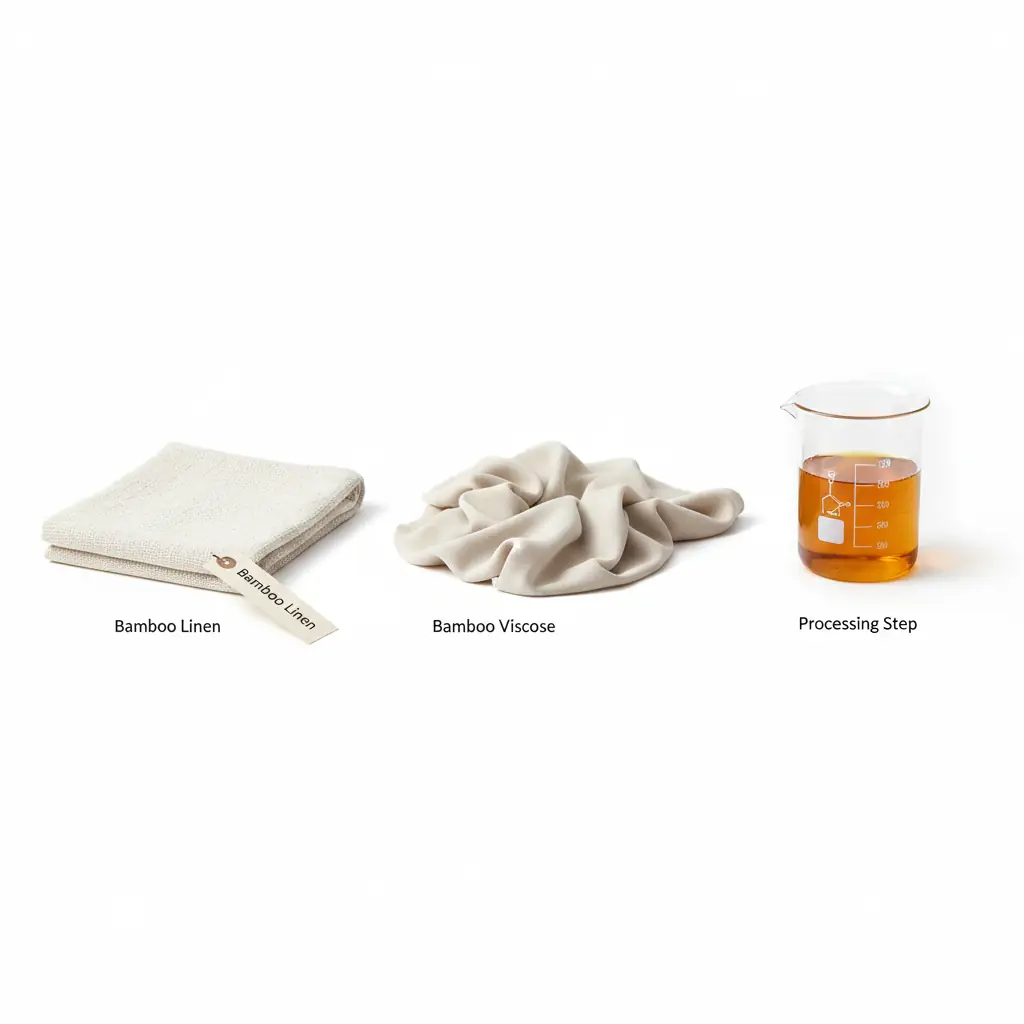
Type 1: Bamboo Viscose (or Bamboo Rayon)
If a tag simply says ‘Bamboo,’ ‘Bamboo Viscose,’ or ‘Bamboo Rayon,’ this is the product you are holding. It accounts for well over 95% of bamboo clothing on the market, prized for its incredibly soft, silky feel.
However, achieving this softness requires an extensive chemical process. The tough, rigid bamboo cellulose is dissolved using strong chemical solvents, most commonly carbon disulfide, a hazardous substance.
This solvent transforms the wood pulp into a syrupy solution that can then be spun into fibers. If the factory doesn’t properly contain and recycle these chemicals, they are released as toxic waste into the environment.
The Hidden Cost: The manufacturing process essentially turns the bamboo fiber into a synthetic polymer, similar to how wood pulp is turned into conventional rayon. Any ‘natural’ benefits, like the bamboo plant’s anti-bacterial properties, are lost.
| Bamboo Viscose/Rayon Summary | Data Point |
|---|---|
| Softness | Very High (Silky) |
| Chemical Use | High (Requires strong solvents) |
| Environmental Impact | Moderate to High (Depends on factory’s closed-loop system) |
| Commonality | Extremely Common |
While some modern factories use ‘closed-loop’ systems that capture and reuse up to 99% of the solvent, this technology is expensive and not yet universal. Always seek verification that a brand uses a certified closed-loop system.
Type 2: Bamboo Linen
Bamboo linen, also called ‘mechanically processed bamboo,’ is the truly sustainable option, though it is much less common and generally more expensive.
This method involves crushing the woody parts of the bamboo plant and then using natural enzymes and water to break down the material into a fibrous pulp. It is similar to how linen is made from flax.
Because it skips the harsh chemical bath, this fabric maintains more of the bamboo’s natural properties. The resulting textile is sturdy and slightly coarse, similar to traditional linen.
The texture difference is a good way to tell them apart: if it feels incredibly soft and drapes easily, it’s likely viscose. If it feels crisp and slightly rough, it’s more likely to be the sustainable linen option.
Why You Don’t See More Bamboo Linen
The mechanical process is significantly more labor-intensive and costly than the chemical method, which is why most brands opt for viscose. The resulting fabric is also not as commercially appealing for items like underwear or soft shirts.
However, when a brand specifically states ‘Bamboo Linen’ or ‘Mechanically Processed Bamboo,’ you can be much more confident in its environmental claims. Always look for this specific language on the label.
The Greenwashing Trap: What to Look For
Because the raw bamboo plant is so environmentally friendly, brands often use this fact to ‘greenwash’ their viscose products, implying sustainability without mentioning the processing methods.
Look critically at the language used. If a brand touts the ecological benefits of the bamboo plant but avoids mentioning the chemical processing, you should be wary. Transparency is key.
For example, if the label says ‘100% Bamboo Fiber,’ it tells you nothing about the manufacturing. A truly transparent brand will specify the process, like ‘TENCEL™ Bamboo’ or ‘mechanically processed.’
Notes for the Conscious Shopper
If you love the feel of bamboo viscose, you don’t have to abandon it entirely. However, you should adjust your expectations and focus on verifying the brand’s production practices.
- Seek Certified Closed-Loop Systems: Look for evidence that the brand sources their bamboo viscose from factories that use certified closed-loop solvent recovery.
- Check for Specific Certifications: Look for independent certifications like OEKO-TEX, which ensures the final product is free from harmful levels of chemical residue.
- Consider Lyocell: If you want the silky feel without the high risk, look for TENCEL™ Lyocell. This is a semi-synthetic fiber (often made from eucalyptus) that uses a non-toxic solvent and a very efficient, closed-loop process.
- Prioritize Durability: If you do buy viscose, commit to wearing it for a long time. Extending the lifespan of any garment, regardless of fiber, is one of the most sustainable choices you can make.
Ultimately, the environmental impact of bamboo clothing is a study in material science versus marketing. The raw material is excellent, but the manufacturing dictates the final outcome.
The Future of Bamboo Textiles
Innovation is moving forward. Researchers are developing new, greener ways to process cellulose into soft fibers, reducing the dependence on harsh chemicals. This will eventually make bamboo viscose a more definitively sustainable choice.
Until then, the power remains in your hands. By reading labels critically and demanding detailed information about the processing, you encourage brands to invest in the cleaner, more responsible methods.
Choose wisely, look for those key words like ‘Linen’ or ‘closed-loop,’ and you can truly enjoy the softness and performance of this incredible plant while minimizing your environmental impact.
 By
By