
Welcome back to moneytags.site! Few things are more frustrating than a fresh stain on your favorite shirt. While the temptation is to reach for powerful chemical cleaners, did you know your pantry holds an arsenal of effective, gentler solutions?
Moving away from harsh chemicals is not only better for your health but also for the environment and often your fabrics. Today, we’ll explore the simple, natural methods that professional cleaners use—methods that rely on everyday ingredients you likely already own.
The Golden Rules of Stain Removal ✨
Before treating any stain, two principles are paramount: speed and pre-treatment. The quicker you act, the less time the stain has to bond with the fabric fibers, making removal much easier.
Always try to gently blot, not rub, the stain with a clean white cloth or paper towel. Rubbing can push the staining substance deeper into the material and spread it, which is the last thing we want!
Additionally, always test your chosen natural solution on an inconspicuous area of the fabric first. This simple step prevents accidental damage, especially on delicate or brightly colored items.
The Natural Powerhouse Ingredients 🍋
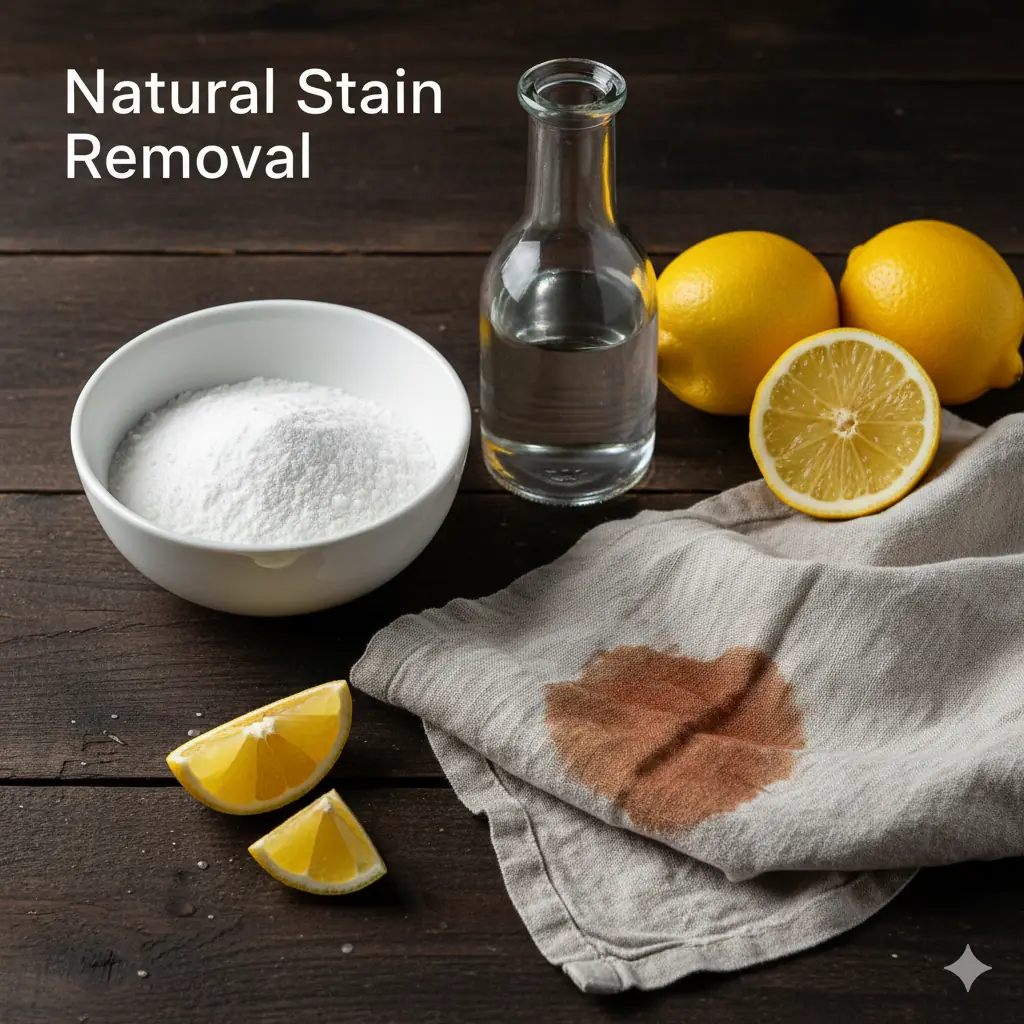
Your kitchen holds three main cleaning heroes: baking soda, white vinegar, and lemon juice. Each has unique properties that target different types of stains effectively.
Baking Soda: The Gentle Abrasive and Deodorizer
Baking soda, or sodium bicarbonate, is fantastic for absorbing odors and acting as a mild abrasive to lift stains. It’s perfect for grease or oil spots that need drawing out, or for neutralizing acidic spills.
To use it, create a paste by mixing baking soda with a little water. Apply this paste directly to the damp stained area, let it sit for at least 15 minutes or until dry, and then brush it off before washing.
For example, if you spill a drop of salad dressing, sprinkle dry baking soda immediately to soak up the oil before it sets. This is a crucial first step in any oil-based stain battle.
White Vinegar: The Acidic Neutralizer and Disinfectant
White distilled vinegar is a mild acid that is brilliant at breaking down alkaline residues, such as hard water marks, perspiration stains, and yellowing. It also acts as a natural fabric softener and mild disinfectant.
For small, fresh stains like soda or fruit juice, mix equal parts white vinegar and water. Soak the stained area for 15 to 30 minutes, then rinse thoroughly. The vinegar smell will dissipate as the fabric dries.
You can even add half a cup of vinegar to your washing machine’s rinse cycle for an all-natural boost to stain removal and general freshness.
Lemon Juice: The Natural Bleach and Brightener
Lemon juice contains citric acid, which is a mild natural bleaching agent. It is most effective on white or light-colored fabrics for treating rust, mildew, and tough yellow stains.
Apply fresh lemon juice directly to the stain, sprinkle some salt over it (the salt acts as a scrubber), and rub gently. Then, the secret ingredient is sunlight: lay the fabric outside to dry in the sun, which significantly boosts the brightening action.
However, a word of caution: due to its mild bleaching property, never use lemon juice on dark or colored fabrics, as it may cause fading or discoloration.
Targeting Specific Stain Types 🎯
Different stains require different approaches. Knowing the nature of the stain—is it protein, oil, or tannin-based?—helps you choose the best natural remedy.
Treating Protein and Tannin Stains
Protein stains (blood, dairy, bodily fluids) should always be treated with cold water. Hot water will ‘cook’ the protein, setting the stain permanently. For blood, soak the area in cold salt water before washing.
Tannin stains (coffee, tea, wine) are often best tackled with the mild acid of vinegar or lemon juice. For a red wine spill, immediately apply a generous amount of salt to absorb the color, then rinse with a solution of white vinegar and cold water.
Handling Grease and Oil Stains
Grease and oil require an absorbent powder to draw out the oil before washing. Aside from baking soda, cornstarch or talcum powder works incredibly well.
Cover the stain entirely with the powder and let it sit for several hours, or even overnight. Once the powder has absorbed the grease, brush it off and then wash the item in the hottest water safe for the fabric, using a bit of dish soap on the spot.
Statistics Corner: Approximately 75% of all household stains can be effectively treated or significantly lightened using only baking soda and vinegar before conventional washing. This reduces the reliance on harsh pre-treaters.
Pros and Cons of Natural Stain Removal
While natural methods are fantastic, they do require a bit more patience and immediate attention than chemical alternatives. Knowing their limitations helps you manage expectations.
| Pros | Cons |
|---|---|
| Non-toxic and safe for sensitive skin. | Requires immediate action and patience. |
| Cost-effective (using pantry staples). | Less effective on old, set-in synthetic stains. |
| Gentle on fabrics and the environment. | Requires knowledge of stain type (e.g., acid vs. protein). |
Conclusion: Cleaning Consciously 🌿
Embracing natural stain removal is a meaningful step toward a cleaner, more sustainable home. These methods prove that you don’t need industrial-strength chemicals to keep your clothes looking fresh and stain-free.
Remember to always act fast, pre-treat correctly, and match your natural cleaner to the type of stain you’re facing. This careful, targeted approach will make you a stain-removal pro in no time.
What unexpected pantry item do you rely on for tricky stains? We’d love to hear your tried-and-true tips!

 By
By