
When one season transitions to the next, it’s tempting to simply shove sweaters into a box or hang linen shirts haphazardly in the back of the closet. However, improper storage is the number one cause of long-term garment damage.
Your off-season clothes—be they heavy wool or light silk—need specialized care to ensure they look fresh and undamaged when you pull them out again next year. Proper storage is a key part of garment longevity.
By dedicating a little time to preparation, you can protect your investment, prevent common issues like pest damage, and keep your entire wardrobe organized and ready for rotation.
Step 1: The Essential Rule of Cleaning
Before any garment goes into long-term storage, it must be thoroughly cleaned. This is perhaps the single most important rule in seasonal clothing preservation.
Invisible stains, body oils, perfume residue, and food particles are a magnet for pests like moths and silverfish. These small residues also oxidize over time, leading to permanent yellowing that becomes nearly impossible to remove later.
Wash or dry clean everything according to the care label, even if the item looks clean. Ensure all items, especially knits and outerwear, are completely dry before packing them away.
Dealing with Delicate Fabrics
Items like wool and silk should ideally be professionally dry-cleaned, as home washing might not fully remove deep stains or prevent shrinkage. Always communicate to your cleaner that the items are for long-term storage.
For machine-washable items, use a gentle cycle and a specialized detergent for the fiber type. For example, use a detergent specifically designed for wool and cashmere to preserve the natural oils and prevent fiber stiffness.
Remember that the residual detergent itself can also attract pests, so a thorough rinse is essential before drying. Cleanliness is your best defense.
Step 2: Choosing the Right Storage Environment
The location and container you choose for storage are just as critical as the cleaning process. Many common storage spots are detrimental to fabric health.
The ideal storage environment is dark, dry, cool, and boasts a consistent temperature. Think about preserving the clothes in museum-like conditions.
Avoid basements (prone to dampness, mildew, and pests), attics (prone to extreme heat and temperature fluctuations), and garages (dust and chemical fumes).
The Best Containers for Garments
Skip the plastic dry-cleaning bags, which trap moisture and fumes, and avoid unsealed cardboard boxes, which are easily penetrable by insects and rodents.
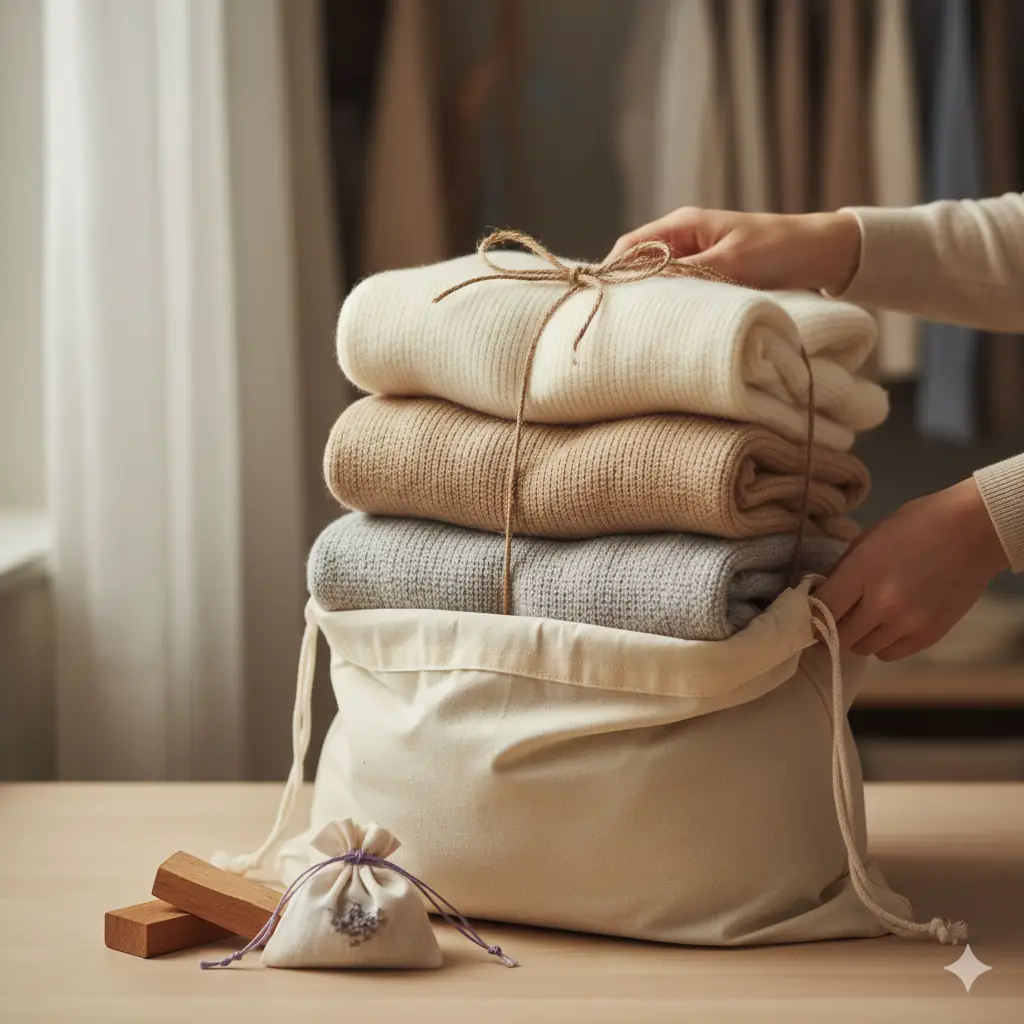
Instead, opt for breathable cotton or linen garment bags for hanging items like suits and coats. For folded items, acid-free archival storage boxes are the professional choice, but clear plastic containers with tight-sealing lids also work well, provided the clothes inside are completely dry.
Never seal precious natural fibers like cashmere or leather in non-breathable plastic for extended periods, as this can lead to moisture trapping and permanent damage.
Step 3: Folding vs. Hanging (and Why it Matters)
How you arrange the items inside the container determines whether they maintain their shape over time. Not all clothes should be stored in the same manner.
Heavy knits, like thick wool sweaters, should always be folded. Hanging them on a hanger—even a padded one—for months on end will stretch them out and create permanent hanger bumps in the shoulders.
Conversely, tailored items, like coats, jackets, and delicate dresses, should be hung on high-quality, sturdy wooden or padded hangers that support the shoulders properly.
A quick example: Think of a damp towel left hanging; gravity will stretch it. The same physics apply to dry, heavy wool. Folding alleviates this stress.
Pros and Cons of Common Hangers
| Hanger Type | Pros | Cons (for long-term) |
|---|---|---|
| Wire Hangers | Space-saving, cheap | Cause creases, distortion, risk rust stains |
| Padded/Wooden Hangers | Maintain shape, durable | Take up more space, higher initial cost |
| Velvet Slim Hangers | Non-slip, space-saving | Can’t handle heavy items, poor for long-term coat storage |
Step 4: Pest and Moisture Prevention
Pests like moths and humidity are the biggest threats to stored clothing. Taking proactive steps can save you from finding heartbreaking holes in your cherished wool or silk.
Instead of traditional mothballs (which use toxic chemicals and leave a pervasive odor), opt for natural deterrents. Cedar blocks or chips, while needing periodic sanding to refresh their scent, are highly effective.
Lavender sachets also act as a pleasant and natural insect deterrent. Place these items in pockets and between layers of folded clothes.
Managing Humidity
If you must store items in a basement or slightly humid location, include desiccant packets (like silica gel) in the storage containers. These absorb excess moisture, helping prevent mildew and musty smells.
It’s also a good practice to periodically open your storage containers every few months to allow air circulation. A brief check also gives you a chance to spot any early signs of pest activity.
Notes on Textile Integrity
- Avoid Vacuum Sealing: While great for saving space, vacuum bags are not recommended for natural fibers like wool or down. The extreme compression can crush the fibers permanently, damaging insulation and texture.
- Never Hang Knits: No matter how light, knit garments must be folded to prevent stretching caused by the weight of the fabric pulling down on the shoulders.
- Check Metal Closures: Before packing, make sure any metal zippers, buckles, or buttons are completely dry. Moisture can cause them to rust and stain the surrounding fabric permanently.
Taking these small steps to maintain textile integrity ensures that the quality and fit of your clothes remain unchanged, ready to be worn the moment the temperature shifts again.
The Return on Investment for Smart Storage
Storing clothes properly isn’t just an organizational chore; it’s a financial and sustainable decision. By preventing damage, you avoid the cost of replacement and reduce your contribution to textile waste.
Furthermore, opening a box of well-maintained clothes is a rewarding experience. They feel fresh and ready to wear, making the seasonal transition easy and enjoyable.
Embrace these professional garment care methods. Your favorite wardrobe items deserve the best protection during their time off, ensuring they remain stylish staples for many years to come.
 By
By