
🌳 What Exactly Is Tencel™? Unpacking the Fiber
If you’ve started looking into sustainable fashion or bedding, you’ve probably seen the name Tencel™. It sounds a bit technical, but really, it’s just a friendly name for a revolutionary type of fabric.
Specifically, Tencel is the brand name for two types of cellulosic fibers: Lyocell and Modal. Most often, when people talk about Tencel, they are referring to Lyocell.
What does ‘cellulosic’ mean? It simply means it’s made from the pulp of trees—usually sustainably harvested eucalyptus, beech, or birch wood. Think of it as nature’s ingredients turned into a luxurious, wearable fiber.
It’s important to remember that Tencel isn’t a natural fiber like cotton, nor is it purely synthetic like polyester. It sits in a special category called regenerated cellulosic fibers.
♻️ The Production Process: Closed-Loop Magic
What really sets Tencel (Lyocell, specifically) apart is how it’s made. Its production process is one of the most environmentally sound in the entire textile industry—it’s called a closed-loop system.
This means that almost all the water and solvents used to turn the wood pulp into soft fibers are captured and reused. It minimizes waste and drastically reduces the factory’s environmental footprint.
In fact, Tencel’s Lyocell process recovers and reuses up to 99.5% of the solvent used. Compare this to the massive amounts of water and chemicals often needed to grow and process conventional cotton.
This smart, circular approach is why Tencel has become such a favorite for brands committed to reducing their impact on the planet.
How Wood Becomes Wearable: The Lyocell Roadmap
It’s fascinating how a hard piece of wood transforms into a silky fabric. Here’s a simple look at the journey:
- Harvesting and Preparation: Wood pulp (from sustainable forests) is dissolved into small chips.
- The Solvent Bath: The chips are mixed with a non-toxic, organic solvent that dissolves the pulp into a sticky, thick liquid.
- The Spinning: This liquid is forced through tiny holes, much like a showerhead, creating long, continuous filaments.
- Washing and Drying: The filaments are washed and dried. Critically, the solvent used in step 2 is recovered and cycled back into the system.
- The Final Fiber: The resulting fiber is soft, durable, and ready to be woven into fabric.
✨ Why Tencel is Popular: Three Reasons You’ll Love It
Beyond its eco-credentials, Tencel has quickly become popular because it simply feels amazing to wear and sleep in. Its physical properties are hard to beat.
1. Unrivaled Softness and Drape
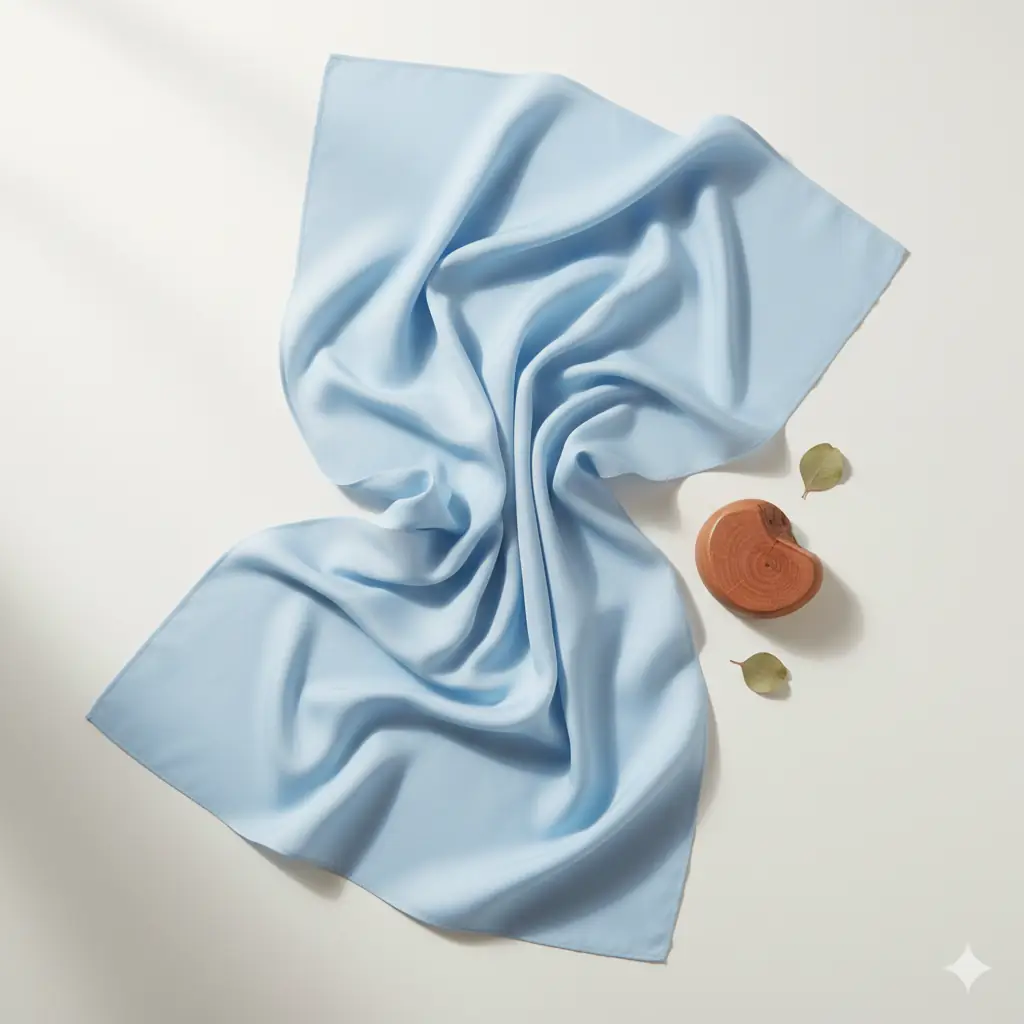
Tencel fabric often feels smoother than silk and incredibly gentle against the skin. It has a beautiful, elegant drape, meaning it falls and moves fluidly.
This makes it ideal for everything from flowing summer dresses to luxurious bed sheets. It provides a luxurious feel without the high maintenance of traditional silk.
2. Superb Breathability and Moisture Management
If you tend to overheat, Tencel is your friend. The fibers have a microscopic structure that allows them to wick moisture away from the body efficiently.
This makes Tencel roughly 50% more absorbent than cotton. It keeps your skin cool and dry, making it a fantastic choice for activewear, underwear, and humid climates.
3. Natural Resistance to Bacteria
Because Tencel wicks moisture away so well, it naturally creates a less hospitable environment for bacteria growth. This means your Tencel clothes or bedding stay fresh longer.
You won’t need to wash them as frequently, which saves you time, water, and energy, adding another small layer of sustainability to the fabric’s lifespan.
🛒 How to Find and Care for Tencel Items
Since Tencel is a brand name, you’ll usually see it clearly labeled on product tags. Look for Tencel™ Lyocell or Tencel™ Modal to ensure you are getting the genuine, sustainably made fiber.
You might find Tencel used on its own, or blended with other fibers like cotton or wool to enhance their softness and improve their drape.
Caring for Tencel is quite easy. It generally holds up well in a standard washing machine, but to maintain its silky feel, use a cold water cycle and either hang it to dry or tumble dry on low heat. Avoid harsh chemicals like chlorine bleach.
By choosing Tencel, you’re not just buying a piece of clothing or bedding; you’re supporting a system that values resource conservation and environmental responsibility—all while enjoying a super comfortable product!
 By
By